
BICtalk: The creators behind planBIC on the transformation in the construction industry
by Sarah Zonsius & Magdalena Deglmann | March 6th, 2025
The construction industry is one of the fundamental sectors of our society, yet it is also known for its complex processes, high demands, and often slow progress in digitalization. This is precisely where we come in. What began as an idea during a doctoral thesis has continued to evolve. At the heart of it all are the founders, Dr. Lisa Lenz and Dr. Julian Graefenstein, who, with their vision, innovative spirit, and a strong team, aim to lead the construction industry into a new era. In this article, we take a look at the company’s origins, the challenges it faces, the transformative power of artificial intelligence, and the changes it is driving in the industry.
The minds behind the digital revolution in the construction industry
We at Building Information Cloud (BIC) are a young startup actively driving digital transformation in the construction industry. Our cloud-based, AI-powered SaaS solution optimizes the review of construction project documentation, improves workflows, reduces costs, and helps identify planning errors early on. Our goal: to sustainably improve the quality of construction projects.
For this article, we spoke with our founders and team members to share their perspectives on our origins and the challenges and opportunities of digital transformation in the construction industry.
Dr. Lisa Lenz, founder and head of marketing and product development, brings extensive experience from the construction industry and ensures that our software is precisely tailored to the sector’s needs. Dr. Julian Graefenstein, also a co-founder and responsible for HR and sales, ensures financial stability and drives the company’s strategic development. Jonas Haude, our Head of IT, is the technical mind behind thinkBIC. Alexandra Nestorowicz is a project manager who brings many years of experience in the construction industry and is committed to diversity and equality in a traditionally male-dominated sector.
Startup success in the construction industry: The courageous path to founding planBIC

Every startup begins with an idea. Dr. Lisa Lenz’s idea originated during her doctoral studies—a moment that profoundly shaped her. She realized that the construction industry faced significant challenges, particularly regarding the standardization and quality assurance of construction project documents and BIM models. This challenge captivated her. “I wanted to transform the construction industry. The efficiency and quality of the processes needed improvement,” she explains. But developing an idea into a company requires more than just vision—it requires courage.
Dr. Julian Graefenstein, the co-founder of Building Information Cloud, shared this courage and enthusiasm for technology. “We wanted to develop a solution that not only saves time but also has the potential to transform the entire industry. Artificial intelligence played a key role from the very beginning,” he adds.
The biggest hurdle was financing. Dr. Lisa Lenz and Dr. Julian Graefenstein had to launch their company during a period when the economy was under pressure due to the COVID-19 pandemic. “It was a risky move, but we had the support of funding programs like EXIST, which helped us put our idea into practice,” says Lenz. Skepticism towards digitalization and the use of AI in the traditionally rather conservative construction industry also presented a challenge. “Many people in the industry are cautious when it comes to new technologies, but that’s precisely where the opportunity lies,” says Dr. Julian Graefenstein.
Her advice to other founders, especially women, who often face particular challenges: “Be brave and just start. Perfectionism often gets in the way. You don’t have to know everything before you begin – the journey unfolds, and you learn with every step.”
How planBIC makes construction projects more efficient through digital solutions

Our SaaS solution, planBIC, was born from a clear vision: to fundamentally improve the way people work in the construction industry. Dr. Lisa Lenz and Dr. Julian Graefenstein developed the software in close collaboration with construction companies, architects, and engineers to ensure that planBIC not only solves theoretical problems but also simplifies the day-to-day work in the sector.
“Our goal was to create a solution that addresses real problems in the construction industry. There are many challenges, especially regarding standardization and quality assurance,” explains Dr. Lisa Lenz. A key feature of planBIC is its ability to manage construction projects more efficiently by automating processes and improving communication between the various stakeholders. “The exchange with our customers has been and continues to be crucial,” emphasizes Graefenstein. “We develop our solutions together with the users to ensure that we address the actual needs of the industry.”
Close collaboration with the buildingSMART network and regular participation in trade fairs and events have ensured that product development remains at the cutting edge. “It’s not just about developing new tools, but about offering the right solutions at the right time,” says Dr. Julian Graefenstein.
Artificial intelligence in construction: efficiency, error prevention and innovation
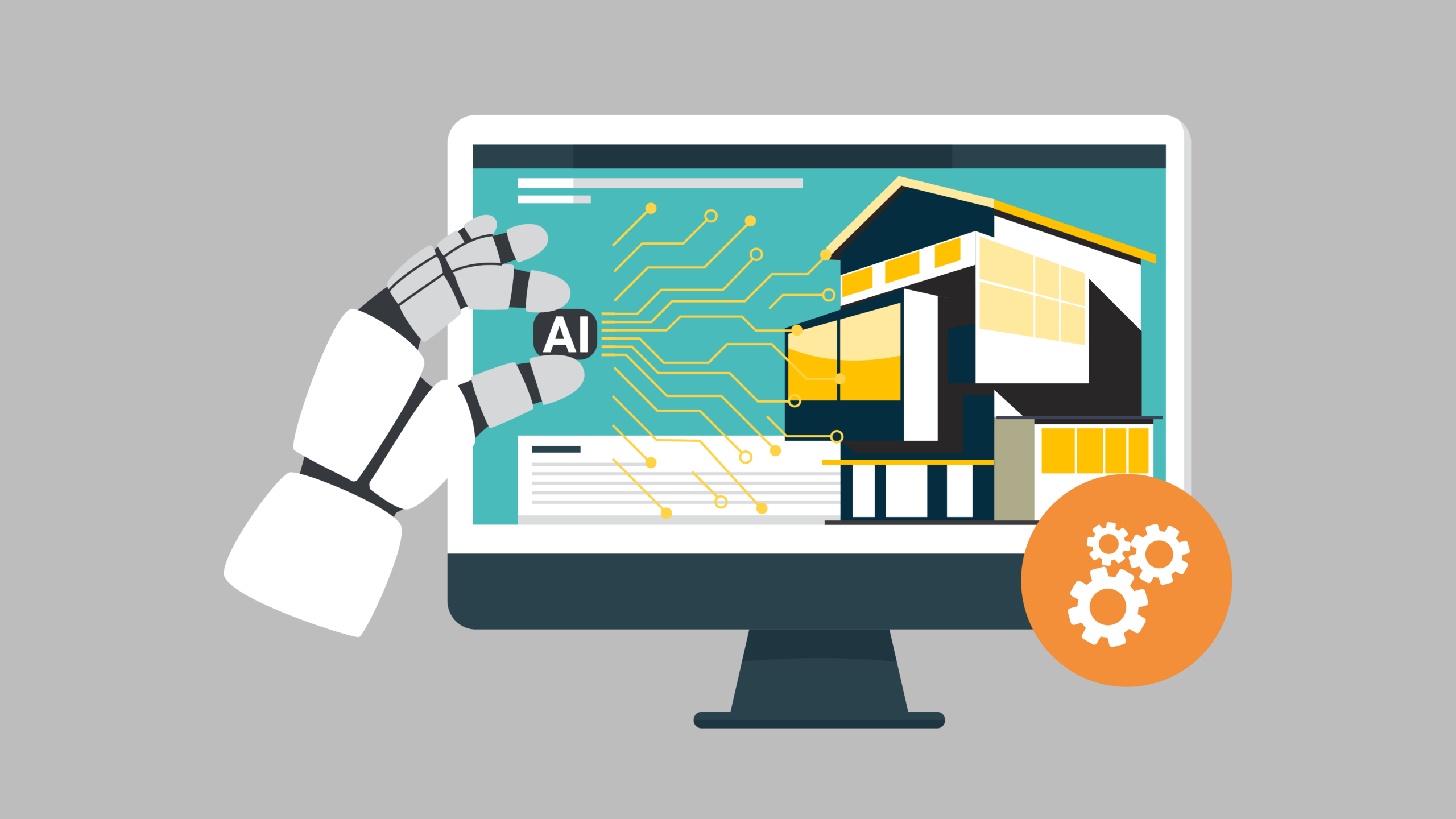
Digital transformation and the integration of artificial intelligence (AI) are among the most important developments in the modern construction industry. For Jonas Haude, the role of AI in the future of the sector is undeniable. “We use AI to optimize processes, reduce costs, and increase efficiency. It helps us analyze large amounts of data in the shortest possible time and make informed decisions,” he explains.
At the heart of planBIC’s technological innovation is the targeted use of artificial intelligence to efficiently analyze documents and automate processes. “With our AI-based software, we can implement construction projects not only faster but also more precisely,” Jonas Haude emphasizes. “chatBIC, our chat AI, allows construction managers and engineers to access an extensive knowledge base. It answers questions about project data and the IFC standard, enabling informed decisions to be made in real time.”
A prime example of the use of artificial intelligence is the automated review of construction plans and BIM models. The software detects inconsistencies or errors in the plan and suggests improvements. This saves time and prevents costly mistakes in later construction phases. “We see the enormous potential that AI offers to revolutionize not only the planning and execution, but also the long-term maintenance and optimization of construction projects,” explains Dr. Julian Graefenstein.
However, the technology is not without its challenges. “Integrating AI into existing processes and ensuring data protection are important issues we are continuously working on,” says Haude. Choosing Microsoft Azure as the technical platform has provided a solid foundation for addressing these challenges while simultaneously increasing efficiency.
Women's power in the construction industry: A long road to equality

Another key theme at the Building Information Cloud is the role of women in the construction industry. Alexandra Nestorowicz is familiar with the challenges women often face in a traditionally male-dominated sector. “There are still many prejudices and stereotypes. Sometimes I’m perceived not as a manager, but rather as an assistant, even though I manage large parts of the company,” says Nestorowicz. These experiences are not isolated incidents. Experience shows that women in technical professions often face structural barriers.
For Dr. Lisa Lenz, it is therefore all the more important to make the work-life balance a top priority for female leaders. “Women need to be encouraged more to take on leadership roles in the construction industry. We need more role models who demonstrate that success and family are compatible,” she explains.
Dr. Julian Graefenstein also emphasizes the importance of diversity within the company. “We are convinced that diverse teams are not only more creative, but also develop better solutions. That’s why it’s important to us to create an environment where everyone, regardless of gender, has equal opportunities.”
However, the path to equality is still long. “We need more workshops and initiatives that encourage women to enter the construction industry and succeed there,” emphasizes Alexandra Nestorowicz. “At the same time, companies need to create structures that allow women to pursue careers without having to choose between family and work.”
The future of the construction industry lies in digitalization and automation.

The construction industry is undergoing a transformation. Digitalization and automation are fundamentally changing the role of the civil engineer. “Building Information Modeling (BIM) and digital twins are indispensable in modern construction planning,” explains Dr. Julian Graefenstein. Technologies that enable more precise planning, early problem detection, and more efficient execution of construction projects are therefore of paramount importance.
For Dr. Lisa Lenz and Dr. Julian Graefenstein, it is clear that the shift towards digitalization is inevitable. “Digitalization opens up entirely new possibilities for us. From planning and execution to building maintenance – everything becomes more efficient and sustainable through the use of technology.” This applies not only to increased efficiency but also to environmental aspects. Sustainability and resource conservation are now essential topics in the construction industry, and digital tools can make a significant contribution here.
Alexandra Nestorowicz adds that the role of the civil engineer is more complex today than ever before. “Today, civil engineers not only need technical expertise, but also the ability to work with data and digital tools. Digitalization is changing the profession, but it also opens up enormous opportunities.”
Despite technological progress, however, humans remain indispensable. “Digital tools can provide support, but the truly important decisions still need to be made by people,” emphasizes Dr. Lisa Lenz. Therefore, we rely on close collaboration between humans and machines – a symbiosis that increases efficiency but does not replace human creativity and decision-making.
Conclusion
With planBIC, we’ve demonstrated how an idea can drive the construction industry forward in key areas. Our focus on digitalization and artificial intelligence has enabled us to develop solutions that make daily work in the sector more efficient and precise. Our AI-powered tools optimize processes and support quality assurance, leading to tangible improvements in construction projects.
Another important aspect for us is promoting women in the construction industry. With Dr. Lisa Lenz and Alexandra Nestorowicz, we are actively working to ensure that more women assume leadership positions in this traditionally male-dominated sector. Diversity within our teams is a crucial component of our success, and we believe it has a positive impact on innovation and collaboration.
The construction industry is transforming through increasing digitalization and automation. We want to help shape this development and offer practical solutions that meet the challenges of our industry. People remain the decisive factor.
The coming years promise to further transform the construction industry, and we are excited to see what new opportunities will arise from advancing digitalization and innovative technologies.
Discover planBIC, a pioneering Software-as-a-Service solution that enables automated completeness and quality checks of construction project documents, as well as collaborative work in the cloud. Revolutionize your construction projects with efficient reviews.