
The potential of the German construction industry: The digital building permit application
by Oumaima Louafi & Jan Schmidt | June 12th, 2024
The construction industry in Germany is a testament to precision, quality, and adherence to strict regulations. However, the path to realizing architectural visions often presents a formidable challenge – the building permit application. This complex bundle of documentation and approvals is not merely a bureaucratic formality, but a carefully designed framework intended to protect the public interest and provide clients with a canvas to realize their dreams. This blog post will show you how to overcome these challenges and fully exploit the potential of the construction industry in Germany.
The building application: A complex web of regulations
At the heart of a building permit application lies a complex web of regulations at the federal, state, and local levels. This regulatory framework is divided into three main strands:
1. Planning law: The cornerstone that determines the feasibility of construction projects on a specific property.
2. Building regulations: The complex framework that defines how a property may be developed.
3. Ancillary building regulations: The supplementary regulations that encompass additional public-law requirements.
Key regulations such as the building code, the building permit application ordinance, and the overarching building code form the fabric of this network and create a comprehensive guideline through which the project must be navigated.
The building permit application form: A guide to complying with regulations
The building permit application form is central to the building permit process and serves as a guide for the authorities to assess your project’s compliance with the complex web of regulations. Details can vary by state, but generally require detailed information about the building authority, the permitting process (simplified or standard), and comprehensive information about the property, the project, and the designer or architect.
Roles and Responsibilities
In the German construction industry, the designer (typically an architect or engineer) plays a key role. They are responsible not only for creating the design but also for submitting the application. The authorization to do so, known as building permit authorization, is granted after fulfilling specific criteria, including a relevant degree, professional experience, and registration with the appropriate professional association.
A Network of Supporting Documents
The building permit application form is not a standalone document; it is accompanied by a multitude of supporting documents, which are carefully prepared during the planning phases. These documents are tailored to the specific project and can include architectural plans, structural calculations, energy efficiency analyses, and more. The responsible building authority may request additional documents to ensure that every aspect is considered and compliant with the regulatory framework.
Digitization of Building Permit Applications
In our ever-growing and evolving world, digitization is an essential part of it. Everyone has already come into contact with digital transformation, whether in everyday life or at work. It is a process that will continue to influence and change many things in the future. The concept of digitization is also slowly gaining traction in the construction industry, even though there is still much room for improvement and optimization. For example, all building permit applications must be digitally accessible and submittable to the building authority. With more than 200,000 building permit applications submitted annually in Germany, this step towards digital thinking often presents a significant challenge. The available tools often offer little scope for collaborative work, making interaction between the parties involved seem lengthy and cumbersome. Otherwise, the information is not always precise enough, leading to uncertainty and confusion among those involved. The opportunities that digitalization offers the construction industry have not yet been fully exploited; future-oriented thinking is also required with regard to the building permit application process and its optimization.
thinkBIC: Bringing innovation to building permit applications
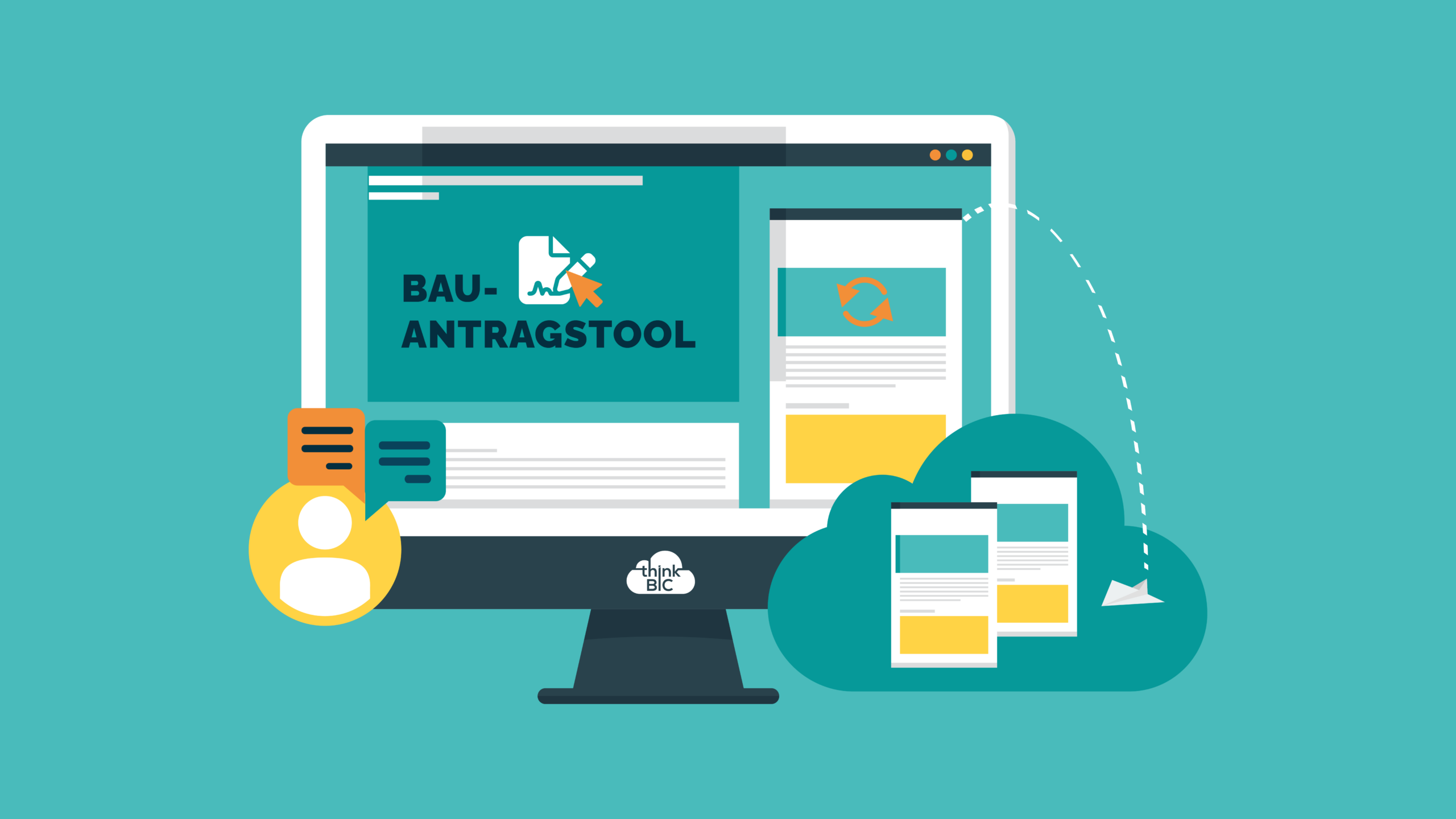
In the ever-evolving landscape of the construction industry, thinkBIC has established itself as a pioneer, offering innovative solutions to simplify the building permit application process. Among its many offerings is the Building Permit Application Tool, an advanced solution that adapts the application form to the specific location and type of planned project.
The Building Permit Application Tool: A Catalyst for Efficiency and Regulatory Compliance
Customized Forms: By asking specific questions about your project, the Building Permit Application Tool automatically adapts the form, ensuring you only encounter relevant questions, reducing confusion and errors.
Digital Efficiency: The tool enables seamless online processing, providing instantly downloadable content and eliminating the need for physical document transfers.
Guidance and Support: Recognizing that not everyone is a construction expert, the Building Permit Application Tool offers helpful guidance and tips for every question, making the application process accessible to all users.
Document Management: With the ability to upload and automatically verify required attachments, the tool ensures completeness and regulatory compliance, reducing the risk of delays or rejections due to missing documents.
Accelerated Approval: By ensuring accuracy and completeness from the outset, the building permit application tool speeds up the review and approval process, allowing you to start your project sooner.
Benefits Beyond the Building Permit Application:
While the building permit application tool is primarily designed to simplify the building permit application process, its benefits extend far beyond the application itself. By fostering a collaborative environment, the tool enables building owners, planners, architects, and engineers to work seamlessly together, ensuring that every aspect of the project is thoroughly reviewed and compliant.
This collaborative approach not only improves process efficiency but also promotes sustainable and responsible building practices. By bringing together different perspectives and expertise, the building permit application tool promotes a shared understanding of the project’s impact and its alignment with the broader interests of the community.
Conclusion
The building permit application process is complex and often daunting, yet it is a crucial step in ensuring that construction activities in Germany comply with legal and community standards. By integrating thinkBIC’s building permit application tool, developers and planners can navigate this complex web more effectively, simplify the application process, and ensure compliance from the outset.
This innovative approach not only simplifies the building permit application but also sets new standards for efficiency and collaboration in the construction industry. By leveraging technology and fostering a collaborative environment, the building permit application tool combines innovation, sustainability, and regulatory compliance, paving the way for a harmonious and responsible built environment.
As Germany continues to respond to the ever-changing demands of urban development, tools like the building permit application tool will play a vital role in shaping the future of construction. By providing developers and planners with the tools to navigate the complexities of the building permit application process, thinkBIC is creating a tool for the digitalization of construction.
Discover planBIC, a pioneering Software-as-a-Service solution that enables automated completeness and quality checks of construction project documents, as well as collaborative work in the cloud. Revolutionize your construction projects with efficient reviews.